Center for Engineering Biology

Center for Engineering Biology

An engineering approach to living systems

Formalise the state of a living system, build computational models, obtain quantitative predictions, test them experimentally and use the experimental error to update the model.

01 · Collect data
Data
Collect data on the state of the living system and check how reproducible the measurements are.
01 / 07
control intervention

What it is

Biology answers why a system ended up in state X. The engineering question is different. Which intervention moves the system from state X to a required X*, and what happens after it.

We do not create a new science and do not claim superiority of the approach. The project shows that an engineering layer is needed in addition to descriptive biology. A model must produce a quantitative prediction before the experiment, and the disagreement between computation and measurement measures the model's quality. A negative result is kept and refines the model.

Directions

Active research is separated from what is only assumed. Work is underway in one direction.

Ageing

The first task and the first demonstrator of the method. A full cycle from transcriptomic data to a pilot in C. elegans, with the prediction tested by experiment.

Pilot. Replication needed

Latest result

A blind prediction matched the experiment

A computational analysis performed without knowledge of the experimental results independently identified the same molecules that were found in the lab. The predicted lifespan extension agrees with what was observed under the studied conditions, and a single dose produced an effect comparable to a repeated one.

Engineering cycle

Seven steps that repeat until the disagreement between computation and measurement is acceptable for a given task.

  1. Collect data. Determine which parameters of the living system can be measured and how reproducibly they hold.
  2. Build a model. Describe the relation between the state and external interventions formally, with explicit assumptions.
  3. State a prediction. Fix, before the experiment, the quantitative result the model considers expected and the bounds within which it holds.
  4. Perform the intervention. Carry out the intervention under controlled conditions, with a control group, so that it can be repeated.
  5. Measure the result. Record the result with the same methods used for the initial state so that the comparison is valid.
  6. Compare computation and experiment. Estimate the magnitude and sign of the prediction error. A negative result is as much a result as a positive one.
  7. Update the model. Change the model in the light of the disagreement and return to step 3 with a new prediction.

Progress is measured by reducing the error between prediction and measurement, not by the number of publications or the persuasiveness of an explanation.

What it builds on

Engineering biology builds on established fields and does not set itself against them.

Systems biology
Describing interacting biological systems and their dynamics.
Synthetic biology
Designing biological constructions and deliberately altering systems.
Computational biology
Analysing biological data from which a measurable state is built.
Machine learning
Building models and assessing their predictions outside training conditions.
Control theory
The language of state, control and feedback in which an intervention is formulated.
Experimental biology
Testing models in living organisms and cell cultures.

Who does this

Gennadii Muzykantov

Gennadii Muzykantov

Co-founder. Engineering models and computation

MSc from MIPT in applied data analysis in medicine. Background in VHDL, reverse engineering, distributed systems and applied machine learning. Responsible for engineering models, mathematical modelling and the computational pipeline.

Alexey Alekseev

Alexey Alekseev

Head of the systems biology of ageing direction

Omics data, biomarkers and the search for geroprotectors. Responsible for the biological interpretation of models and for linking computational results to data, including measurement limits and experiment validity.

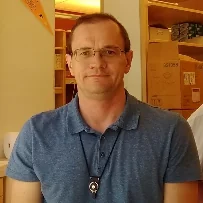
Sergei Vatolin

Sergei Vatolin, PhD

Head of the experimental programme

PhD, senior researcher at Case Western Reserve University, Division of Hematology and Oncology, Cleveland. In preclinical drug development since 1990, from target identification to a therapeutic candidate. He develops assays for anti-ageing and anti-tumour compounds and translates the project's hypotheses into cell experiments.


Experts and advisers

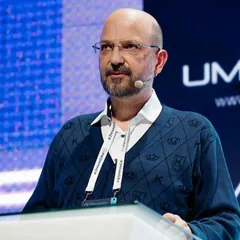
Alexander Belenov

Alexander Belenov

Top expert at the AI Competence Centre of ANO Digital Platforms.

Alexander Klakovsky

Alexander Klakovsky

Deployment of AI agents at big tech companies.

Dmitry Kryukov

Dmitry Kryukov

Bioinformatician, organiser of the “Mathematics of Aging” community (computage.org, Telegram).

Center for Engineering Biology

The project develops an engineering approach to living systems and publishes experiment records as they are completed.

Engineering biology here does not replace synthetic or computational biology; it adds a requirement for the full cycle. Project texts are published on Habr.